Luhu Groningen: more than coffee – visibility, Deaf culture and sign language
Why I am writing this blog
I am Engelien Kester and I was asked to write a blog in the run-up to World Deaf Day. I saw this as a great opportunity to share the story of Luhu, but also to explain something about Deaf culture and the visibility of sign language. Because I live it every day, I know how valuable and necessary that visibility is.
This last week of September – the International Week of the Deaf – is the perfect moment to reflect on that. It is a week when worldwide attention is given to sign language, Deaf culture and the rights of Deaf people. And we, at Luhu, warmly invite you to join in. Because visibility only truly happens when hearing and Deaf people meet, are curious about each other, and together discover that communication can be so much more than spoken language alone.
You may be wondering: what exactly are the International Week of the Deaf, the International Day of Sign Languages on 23 September, and World Deaf Day on the last Saturday of the month? I will explain that later in this article. First, I want to take you into the story of Luhu – a place where sign language is the norm every day, and where you can experience Deaf culture yourself.
Who we are: Luhu Groningen
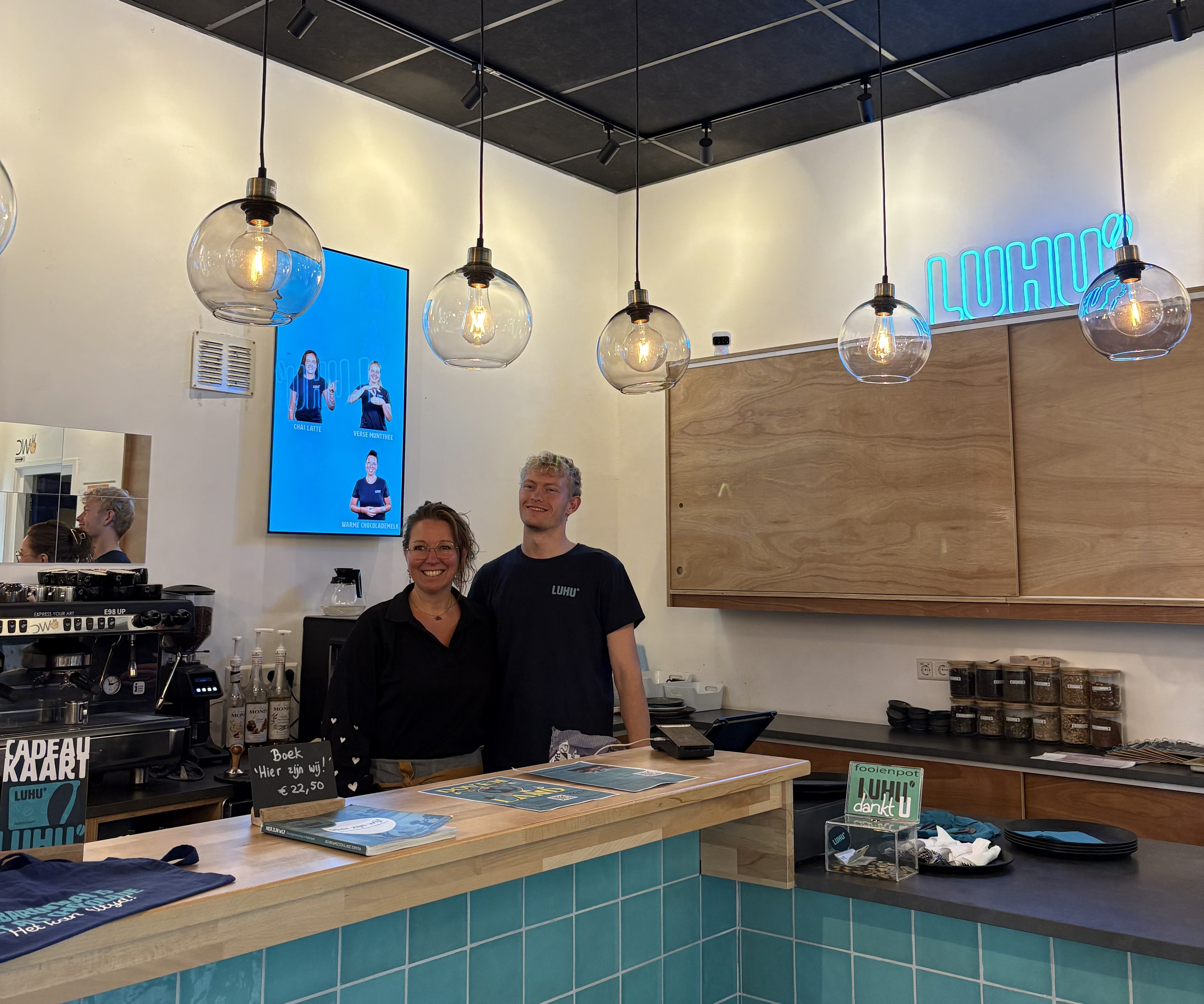
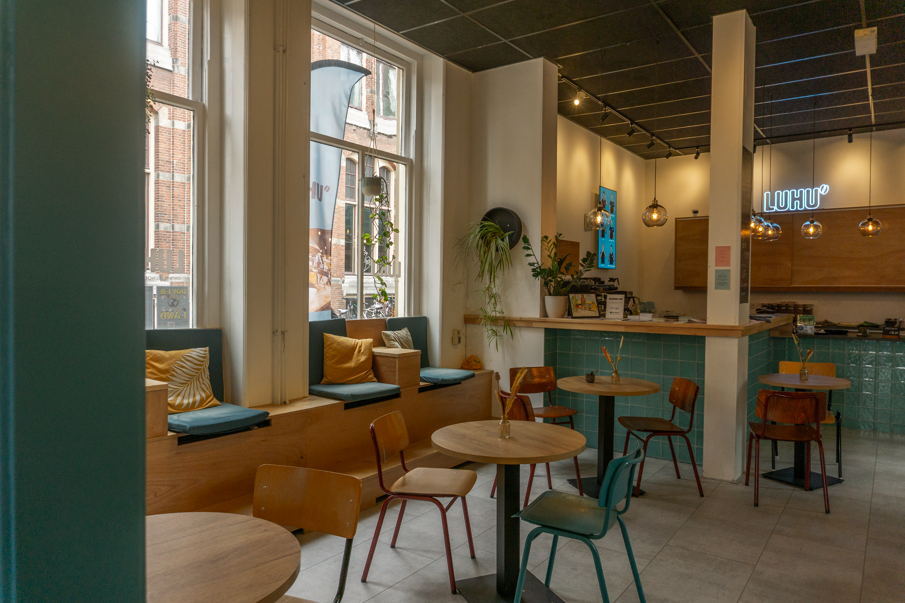
Luhu is a coffee bar in Groningen, but not just any. We are fully run by Deaf and hard-of-hearing people. From barista to owner – that last one is me – everyone here works in their own language: Dutch Sign Language (NGT).
That often leads to funny situations. I regularly get the question: “Can I speak to the owner?” To which I smile and say: “That’s me.” It remains surprising how many people automatically assume that the manager must be hearing.
The same happened when Robin from StayinGroningen contacted us about this guest blog. She thought it was a nice idea to publish something about a café run by Deaf people for World Deaf Day. When we met, she automatically started talking as if I were hearing. Only when I said: “Wait, I am Deaf – could you please type it?” did she realise. Later she admitted she had simply assumed that the owner would be hearing. That kind of assumption shows why visibility is so necessary.
Communication at Luhu: how it works
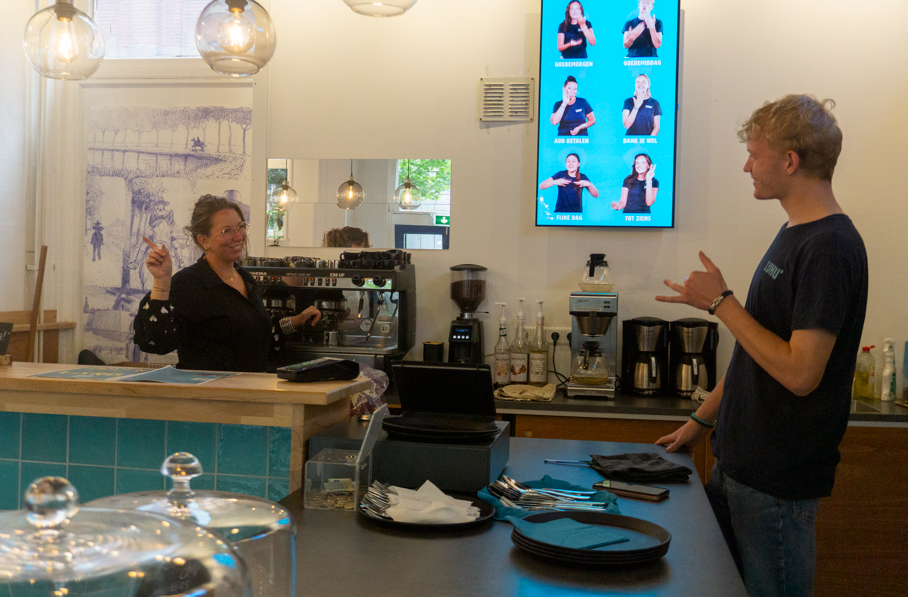
Many guests ask: “How do I order at your place if I don’t know sign language?” The answer is simple: just like everywhere else, but slightly different. You can point, type on your phone, act it out or look up a sign in our sign dictionary. And if you don’t know? Just ask! We actually enjoy it when people are curious and willing to try something new.
A nice example is the sign for cappuccino. You make it by pulling an imaginary hood over your head. It may look funny, but it is very logical: the word “cappuccino” comes from “cappuccini,” monks who wore brown robes with hoods. This shows how signs often have a visual origin.
Most visitors are amazed at how smoothly communication flows. They often start a bit hesitantly, but within minutes it feels natural. And it usually ends with a smile.
Experiencing Deaf culture in the café
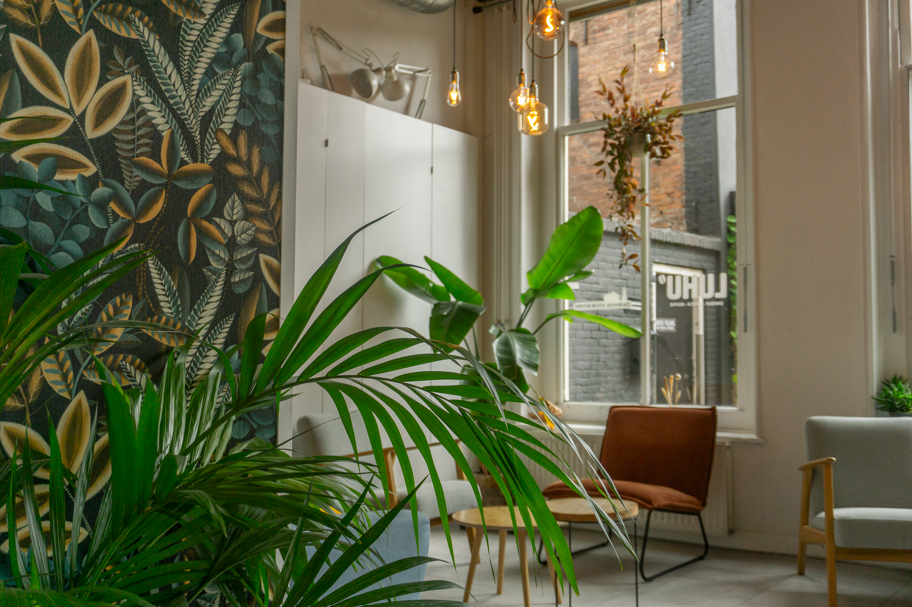
Luhu is more than a place to drink coffee. It is a space where you can experience Deaf culture up close. Deaf culture revolves around visual communication, equality and connection. Where hearing people are used to noise and background music, we offer quiet. No loud radio or TV, but silence in which your eyes and hands are the most important tools of communication. For many visitors – both hearing and Deaf – this feels refreshing.
You also see here how Deaf people set the norm. In many workplaces, Deaf people have to adapt to hearing colleagues, explain that they can do things too or constantly prove that they belong. At Luhu, it is the other way around: here sign language is the standard. That creates a different energy – staff feel seen and valued, without having to pretend to be someone else.
Why visibility matters
You may remember: during the COVID period, interpreters suddenly appeared at all press conferences. Wonderful, because it gave huge visibility to sign language. But something strange happened: the focus went mainly to the interpreter, not to Deaf people themselves.
To this day, Deaf people are often invisible. People find it daunting to make contact, afraid it will not work or that they will do something wrong. That is exactly why visibility is so important.
At Luhu we show every day that communication does not have to be complicated. That it can even be fun and connecting to interact in a different way. And that Deaf people are not pitiful or dependent, but powerful, creative and entrepreneurial.
Luhu as a place to work and learn
When I started Luhu, I had a clear mission: not only to serve coffee, but also to create workplaces and learning opportunities for Deaf and hard-of-hearing people. Places where their own language is the norm, where they can grow, and where they don’t have to keep explaining that they can do things too.
That may be our greatest success: showing that a business can be fully run by Deaf people, without compromising on quality or professionalism. Staff feel at home, valued and proud. And guests notice it: the hospitality and the atmosphere are unique.
Who is Luhu for?
Sometimes we are asked: “Is this a café only for Deaf people?” I sometimes joke: “Are only Italians welcome in a pizzeria?” Of course not! Everyone is welcome at Luhu.
In fact, most of our guests are hearing. And we notice that very diverse groups feel comfortable here. People who are quickly overstimulated appreciate the quiet. Many visitors from the queer community like to come back because they feel welcome and safe here. And of course Deaf and hard-of-hearing people themselves, who feel naturally at home.
Extra possibilities at Luhu
Our café is not only a place to drink coffee. Did you know that you can also hold meetings here?
Upstairs we have a spacious room with a large screen and projector – ideal for business meetings, workshops or trainings. We are happy to provide an extensive lunch buffet as well.
And would you like to make your meeting extra special? Then you can book an interactive lecture from me. For example about:
- How to communicate when you meet a Deaf person on the street.
- What Deaf culture is about.
- How sign language works and why it adds so much.
I always tailor the content to the audience and your wishes. That way your meeting is not only a practical event, but also an inspiring experience.
Link to the broader context
From 23 September the International Week of Sign Languages begins. This is the perfect reason to reflect on the value of sign language and Deaf culture. The week starts with the International Day of Sign Languages (23 September) and ends with World Deaf Day (27 September).
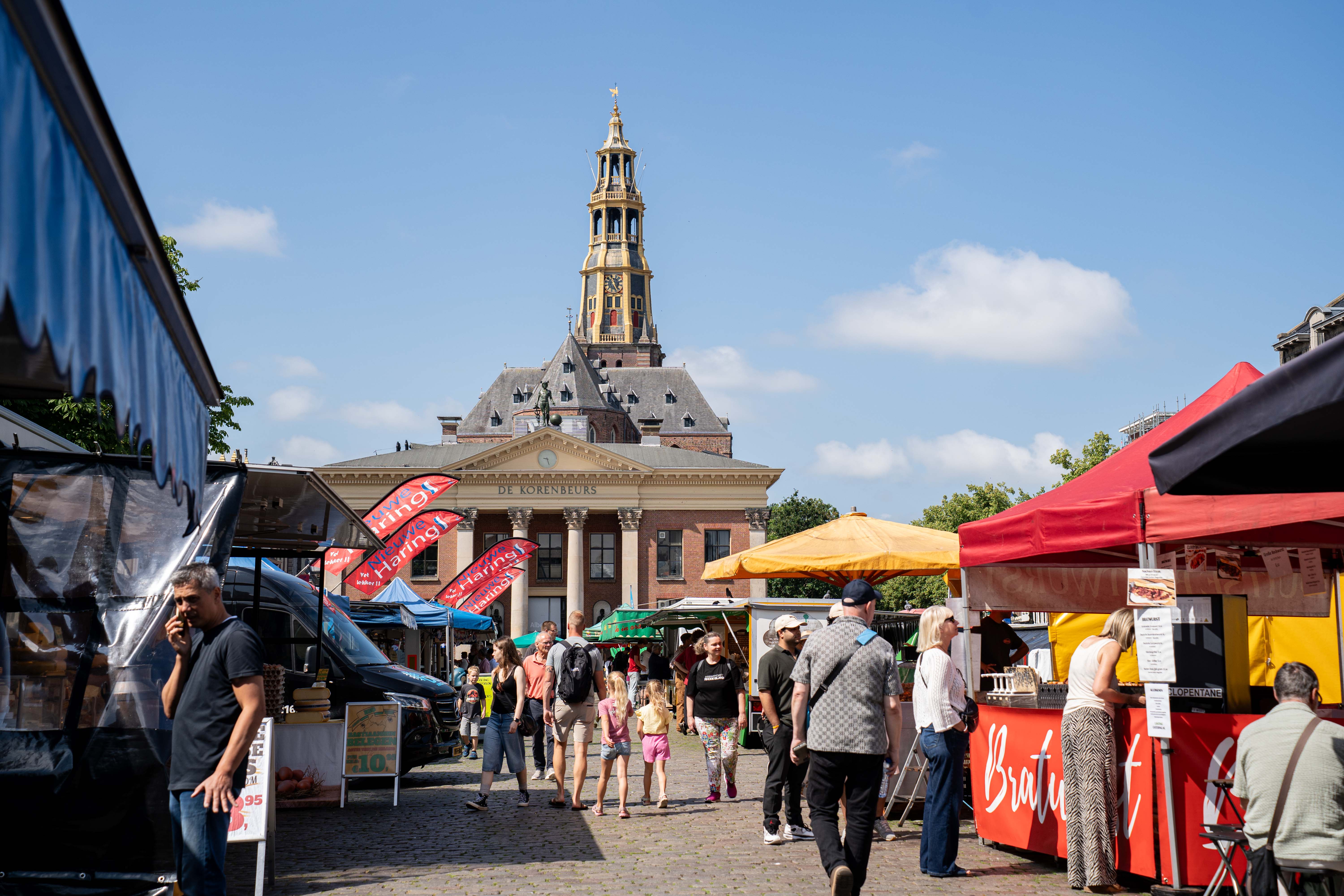
In the Netherlands it is celebrated in five cities: Groningen, Utrecht, Amsterdam, Rotterdam and Den Bosch. In Groningen we work with the Deaf Clubhouse to make it an unforgettable day. During the day you can come to Luhu for a special menu, and in the evening there is a party in the big hall of the clubhouse – and yes, Luhu stays open too.
Why these days matter
The International Day of Sign Languages and World Deaf Day are not goals in themselves. They are a means to draw attention to something bigger: inclusion and visibility. As long as assumptions persist – that the owner of a café must be hearing, or that communication with Deaf people is complicated – we still have work to do.
At Luhu we contribute to inclusion every day. Not by saying it is possible, but by showing it.
Call to action: come and experience it yourself
Would you like to contribute to more visibility for Deaf people and sign language? Start small. Talk about it with your friends, family or colleagues. Tell them that World Deaf Day exists. Or better yet: come to Luhu.
Order a cappuccino, a chai latte or our popular carrot-ginger soup with Lebanese bread. Try out a sign, experience how easy communication can be – and how much fun it is to connect in a new way.
Together we can make Groningen, and hopefully the whole of the Netherlands, a bit more Deaf-friendly.
Extra info International Day of Sign Languages & World Deaf Day
International Day of Sign Languages
Held annually on 23 September.
Established by the World Federation of the Deaf (WFD), founded in 1951.
A worldwide day to reflect on the rights of Deaf people and the importance of more than 300 sign languages.
International Week of the Deaf
Takes place every year during the last week of September.
A global celebration of the Deaf community and sign language, aimed at raising awareness, promoting Deaf culture, and advocating for the rights and inclusion of Deaf people.
World Deaf Day – Saturday 27 September 2025
In the Netherlands, World Deaf Day is organised by Dovenschap.
This year, events will take place in five cities: Groningen, Utrecht, Amsterdam, Rotterdam, and Den Bosch.
In Groningen, we collaborate with the Deaf Clubhouse for a full day of activities, a special menu at Luhu, and an evening party to celebrate.
-medium.jpg)
.png)